
The short answer
A deck builder's website needs real photos of finished decks, a page for each service, your service area stated plainly and a quote form that works on a phone. It has to look like a company worth paying thousands to. Siteline Deck and Rail's website was one part of an engagement that sold $438,880 in 90 days.
In this article
- What does a deck builder’s website have to do?
- What did Siteline Deck and Rail’s website look like?
- Is the $438,880 figure from the website?
- What should a deck builder’s site show first?
- How many pages does a deck builder need?
- What should the quote form and contact details look like?
- How does the site work with the ads?
- Does a good website get a deck builder more calls?
- When is a new site not the right spend for a deck builder?
- Common questions
- Want to know if your market is still open?
What does a deck builder’s website have to do?
It has to make a homeowner who is about to spend thousands of dollars trust you enough to ask for a quote. That is the whole job. A deck or railing project is a large, visible purchase, and the person looking at your site is usually comparing you with at least one other builder.
So the site is judged on a few plain questions. Does this company build the kind of deck I want? Do they work in my area? Do the finished jobs look good? How do I ask for a price? Anything on the page that does not help answer one of those is decoration.
What did Siteline Deck and Rail’s website look like?
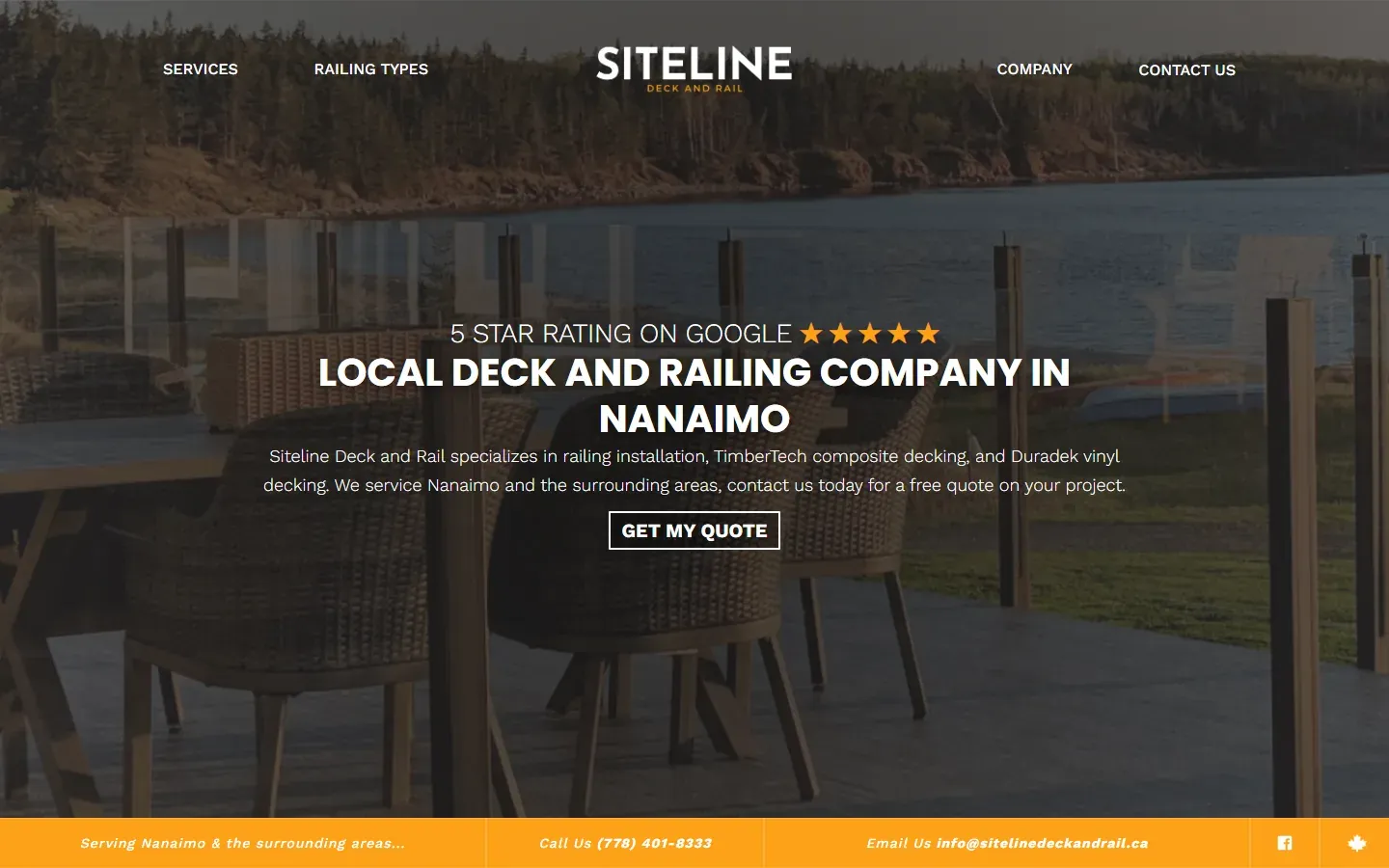
Siteline Deck and Rail is a deck and railing company in Nanaimo, BC, and a Rega client. The scope we delivered for Siteline was the website, the brand, paid advertising on both platforms and the system that catches every enquiry. This is the top of its homepage on a desktop screen.
And this is the same page on a phone.

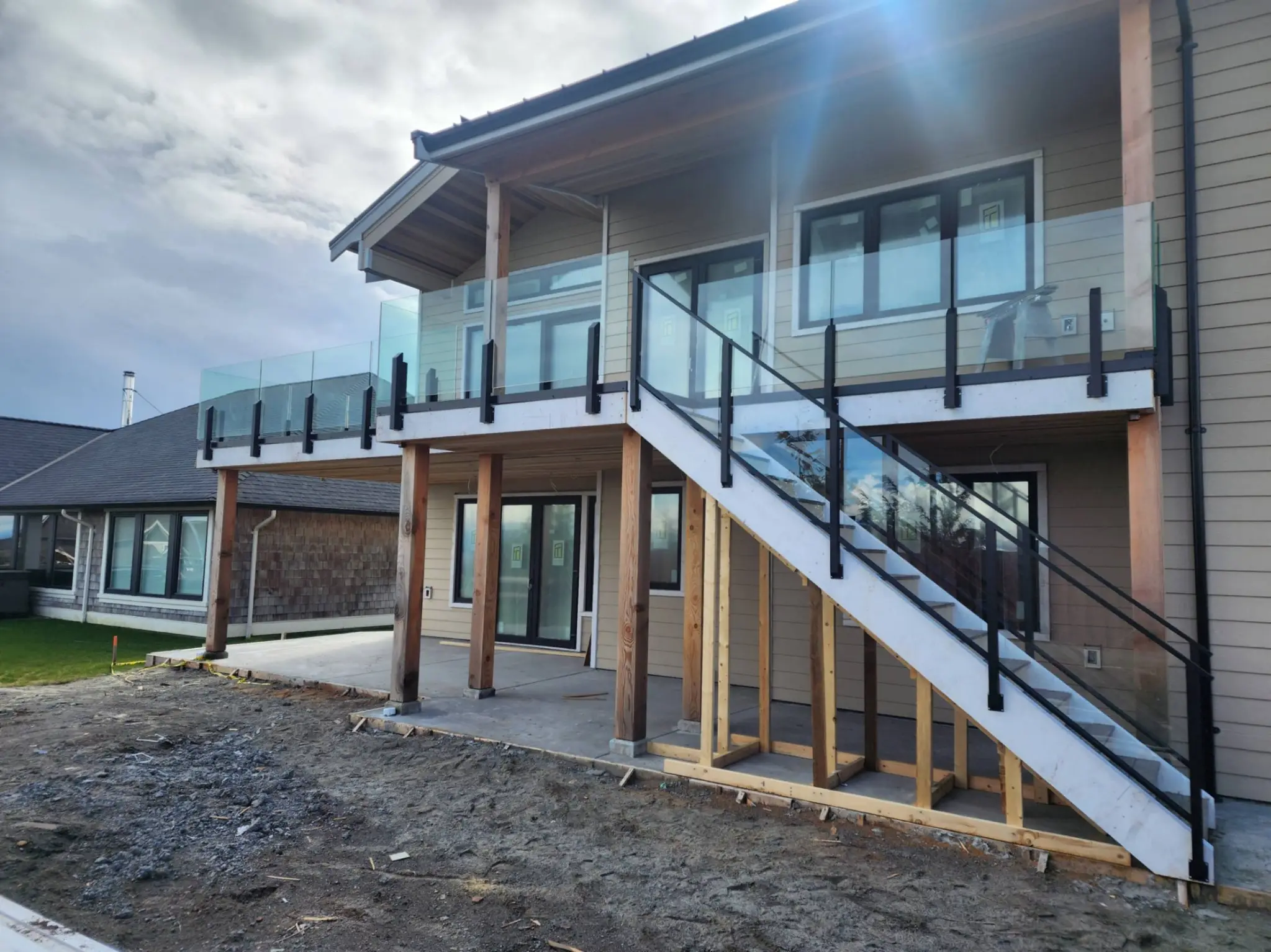
Look at what is in view before anyone scrolls. A real deck with glass railing fills the screen. The headline says what the company is and where it works. The services are named in one sentence. There is one button for a quote and a phone number in a bar along the bottom of the screen. That is a small set of decisions, and each one answers a question from the list above.
Is the $438,880 figure from the website?
No, and it would be wrong to say so. Siteline sold $438,880 in 90 days, and that came from the website, the brand, the ads and the follow-up system working together, built from the ground up. We do not credit it to the website alone, and a deck builder should not expect a new site to do that by itself.
What the website did was carry the trust. In Rega’s own case-study account, Siteline had no Google Business Profile, no website and no social media accounts when it first reached out, and its work came from network referrals. Brandon Lawson, co-owner, describes the start this way: “When we started, we had minimal branding and no real marketing plan.” The site was built to give people a reason to believe in a new company, because, as the case study puts it, customers will not spend thousands on new railings unless they are confident in the company.
Brandon also reviewed the build on Google: “The websites he created are not only visually appealing but also feels modern and relevant.” That review covers the sites Rega built for his construction company and a second business, so read it as a comment on the work in general, not as a measurement.
What should a deck builder’s site show first?
Your best finished work, from real jobs, and a clear statement of what you build and where. A homeowner decides in a few seconds whether your decks look like the one they picture. Photos of your own jobs do that better than any sentence. Stock images of a generic backyard do the opposite, and people can tell.
Put the main services in words a homeowner would use: composite decking, aluminum or glass railing, vinyl decking, rebuilds and repairs, whichever you do. Siteline’s homepage names the products it installs rather than calling itself a full-service outdoor living company. Naming the thing you build is also how a page gets found when someone searches for it.
Then say where you work. A town or region named on the page tells the homeowner you are local and tells a search engine which searches the page is for.
How many pages does a deck builder need?
Enough that each service you sell has a page of its own, and not many more. A page for decks, a page for railings and a page for each material or product you want to be known for gives a homeowner a page that matches what they searched for. One page that lists everything you do is weaker for both the reader and search.
We do not print a page count for a deck site, because it depends on what you build. A company that only installs railing needs fewer pages than one that builds, repairs and rails. Start with the services that pay best and add pages as you can back each one with photos and real detail.
A gallery of finished jobs, a short page about the company and a contact page round it out. The contact page is the one many owners underbuild, and it is where the money is decided.
What should the quote form and contact details look like?
Short, and usable with one thumb. Plenty of homeowners will open your site on a phone, so the form should ask for a name, a phone number, the town and a line about the project, and not much more. A long form loses people who were ready to ask.
Keep the phone number visible and easy to tap on every page, as Siteline’s sits in a bar on its homepage. Give the next step a name that is specific: a quote, a design consult, a site visit. “Contact us” tells a visitor nothing about what happens next.
Then connect the form to something that answers. Siteline’s lead system includes estimator quote forms, appointment notifications, missed-call text-backs, automated follow-ups and pipeline tracking. A quote form that sends an email nobody reads for two days is a leak, and deck quotes are large enough that one lost quote matters.
How does the site work with the ads?
The site is where the click lands, so it has to match the ad. A homeowner who clicks an ad showing a glass-railing deck and lands on a page that looks thin or generic will leave. Siteline’s ads ran alongside a built website and a follow-up system, not instead of them.
We cover the ad side in running ads for a deck business, including what the account recorded in two stated windows. That article treats the ads on their own, and this one treats the site. Either can be done badly and drag down the other. If you are weighing how much a site costs before anything else, what a contractor website costs in Canada lays out what moves the price.
Does a good website get a deck builder more calls?
It helps, and nobody can honestly promise a number. A website is the place calls get caught. It is not what creates the demand on its own, and it cannot fix a business that does not answer the phone or reply to quotes. If your site looks fine and the phone still stays quiet, the reasons a contractor site is not getting calls are worth reading before you rebuild anything.
We make no promise about leads, rankings or sales from a website, here or anywhere on this site. What we can show is one real engagement, stated with its full scope, which is why the Siteline figure above is attached to the website, brand, ads and follow-up together.
When is a new site not the right spend for a deck builder?
If you have no photos of finished work, because the site will have nothing real to show. A weekend spent photographing your last five decks is a better first step than any design.
It is also worth waiting if your current site already looks credible and the real problem is slow answers to enquiries. That is a follow-up problem, and a new design will not solve it. And a site built for a trades business works when the owner takes part: supplying photos, saying how they want to come across and answering questions quickly. Without that, the site is worse whatever it costs.
Common questions
Do I need a blog or articles on my deck builder’s site? Not on day one. Articles are how a site gets found for questions homeowners ask before they hire, and they are part of SEO for contractors. Start with the core pages and the photos.
Can a site rank for deck builder searches? It can be built to give itself a chance, with a page per service, the town named and real content. Siteline’s website was built with search in mind and its content was grown over time. We do not promise rankings.
Should the site have prices on it? That is your call. We have no sourced benchmark for what deck builders publish, so we do not advise one. A clear next step and a fast reply matter more than a number on the page.
Who owns the site after it is built? Ask before you sign with anyone. Our published answer is that you own the site and the code at the end of it.
Want to know if your market is still open?
We take one client per trade per market, so the first thing worth finding out is whether yours is available. Ask for a market check through the contact page: tell us your trade and where you work, and we will tell you where it stands before anyone talks about a price.